
E-Bike Accessory Receiving Checklist for Wholesale Orders
When a wholesale delivery arrives, compare three records: what the purchase order requires, what the packing list says was shipped, and what the receiving team actually finds. Record quantities by exact SKU and unit of measure. Keep shortages, wrong variants and damaged items separate so each difference has a clear next step.
This e-bike accessory receiving checklist is for bike shops and distributors. Use it to design a receiving record, then agree the checks and reporting requirements with the supplier and logistics provider before shipment. It does not replace the order’s inspection criteria or claims process.
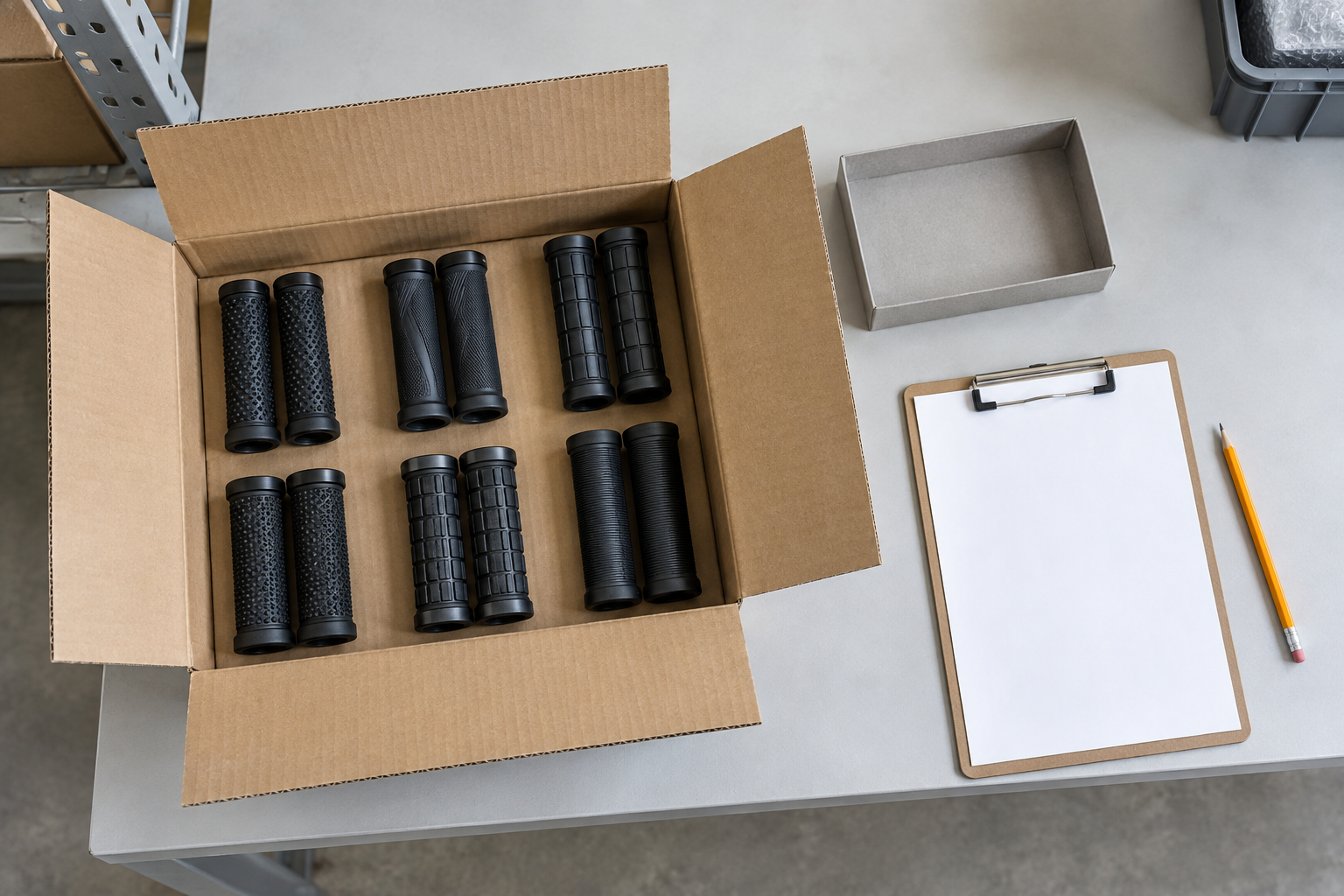
Start with the documents for this delivery
Have the current purchase order, packing list and any agreed changes available at the receiving location. If the order is arriving in parts, identify which lines and quantities belong to this shipment. An open balance on the PO does not, on its own, prove that the delivery is short.
Check the item reference as well as the product name. Two mounts may look similar while using different clamps. A light set may include a different bracket, cable or manual language. Preserve the ordered version and the delivered identifier instead of reducing both to a broad description such as “bike accessories.”
If the label cannot be matched to an approved item, record the identifier as received and ask for clarification. Do not silently assign the nearest-looking SKU. The product-data handoff guide covers the item records that should be ready before a shipment arrives.
Count against the same unit
Keep the ordered quantity, shipment quantity and physical count in separate columns. Add the counting unit to every quantity that could otherwise be ambiguous. A carton, retail pack, pair and individual component are not interchangeable.
| Receiving field | What to record |
|---|---|
| Delivery identity | Receipt date, shipment reference and PO line |
| Item identity | Ordered SKU/version and delivered label reference |
| Expected quantity | Quantity on this packing list, with its counting unit |
| Observed quantity | Actual count and the extent of the check |
| Difference | Missing, excess, wrong variant or visibly damaged quantity |
| Follow-up | Evidence reference, responsible person and next review date |
Hypothetical example: a packing list states 80 pairs of grips and the receiving team counts 76 complete pairs. The recorded shortage is four pairs. If the team instead finds 76 pairs plus eight unmatched individual grips, record those pieces separately; do not treat them as four usable pairs without checking the agreed configuration.
The example explains the record, not a required counting method. Agree whether the receiving procedure checks every unit, sealed packs or a defined sample, and state what was actually checked. A complete carton count does not establish that every item inside is correct. For pack definitions, use the case-pack planning guide rather than recreating the packing specification during receipt.
Make each difference traceable
A useful discrepancy record connects an observation to a specific carton and order line. Photograph the relevant label and the issue in context when it is safe to do so. A close-up of damage without a recognizable item or shipment reference may be hard for another person to interpret.
Describe what is visible before suggesting a cause. “Carton C04 has a torn corner; two retail boxes inside are crushed” is more useful than “the carrier damaged the order.” Keep original images and receiving notes together, and remove unnecessary personal details before sharing them outside the business.
The GS1 Logistic Label Guideline, Release 1.3 discusses receiving advice and keeping the relationship between logistics units and their contents. The practical point here is traceability: another person should be able to connect the delivery record to the goods. An internal carton number is not automatically a GS1 identifier, and this checklist is not a GS1 compliance assessment.
Give the exception an owner
Route a quantity question, an unidentified version and a suspected product defect to the appropriate person. The warehouse can report what arrived; purchasing can reconcile the shipment plan; a qualified reviewer can assess a technical concern. Record a named owner and the next review date instead of leaving the status at “supplier contacted.”
For example, a short note might read: “PO line 3 calls for the black clamp version. Carton C07 is labeled as the silver version. Please confirm whether the label or the contents differ from the approved order and identify the proposed next step.” This asks for clarification without accepting a substitution or demanding a remedy that has not been agreed.
Follow the reporting process and deadlines that apply to the order and carrier. There is no single claims deadline in this checklist. If an item presents a safety concern, stop routine handling and use the relevant approved safety procedure; do not improvise electrical tests or repairs to finish the receiving task.
Close the record without hiding an open decision
Keep physical receipt, technical review, commercial resolution and release to available stock as separate statuses. A count can be complete while a wrong-variant decision remains open. A promised replacement is not a received replacement, and a request for credit is not an approved credit.
When the issue is resolved, attach the decision and its scope to the original discrepancy. Note whether the PO balance remains open, which items can move to the next inventory status, and who approved that change. Keep the evidence of the original delivery rather than overwriting it with the corrected quantity. These record-keeping suggestions do not determine the legal effect of signing delivery documents.
Planning a new OpenRyd order? Include the item references, quantities by version, destination and any carton-label or receiving-document requirements in your quote request. Specifications, documents and commercial arrangements need confirmation for the particular order. For an existing delivery issue, use the contact and reporting process agreed for that order.
